Porsche 912Buying Guide, History & All Model Years (1965–1976)
For a long time, the Porsche 912 lived in the overwhelming shadow of its big brother, the 911. Dismissed by collectors as an "entry-level model" or "economy Elfer," the tide has turned in recent years. Today the 912 is recognized for what it always was: the more dynamically harmonious classic.
With the lightness of the 356 heritage and the timeless lines of the early F-model, it offers a driving experience that could hardly be purer. This guide draws on authoritative sources including Porsche 912 – 50 Jahre by Jürgen Lewandowski.
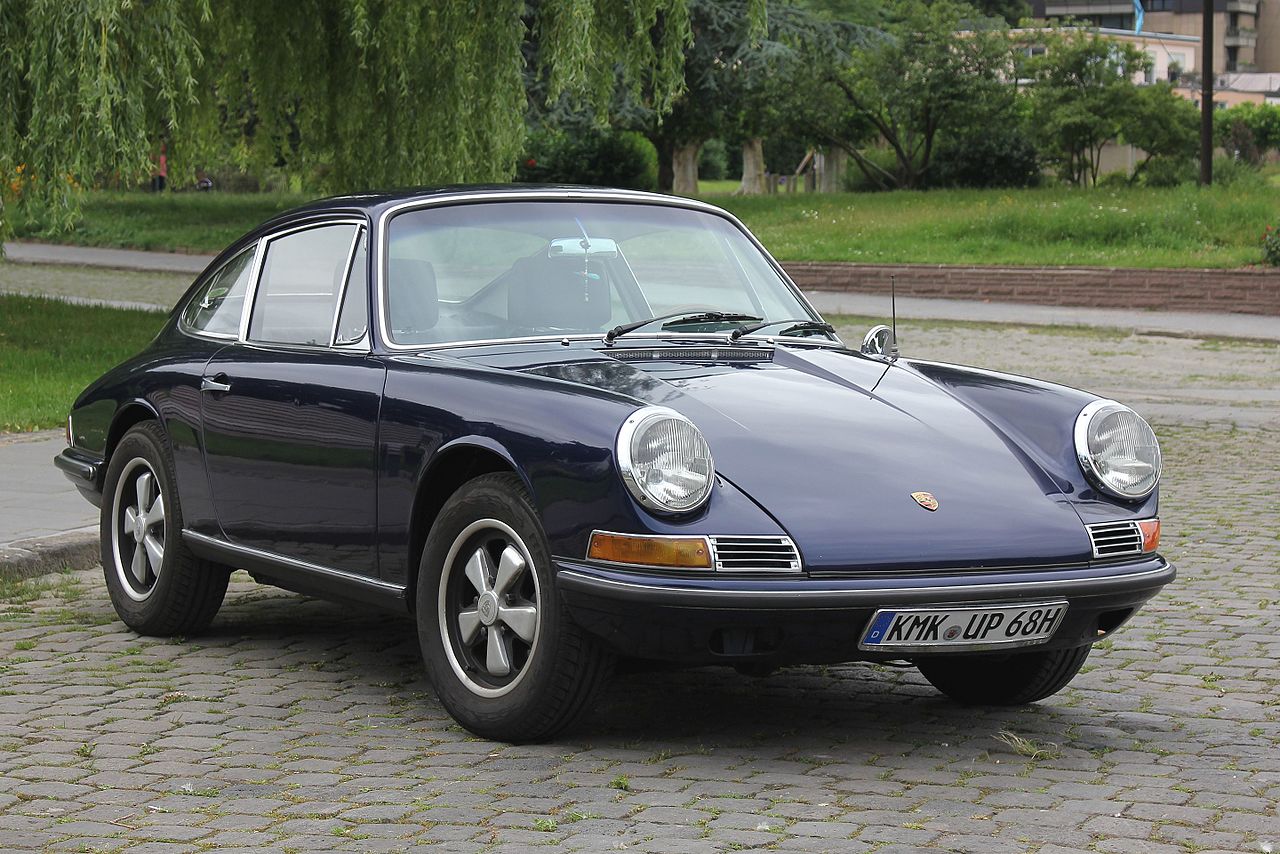
Photo: Lothar Spurzem, CC BY-SA 2.0 DE, via Wikimedia Commons
The Genesis of an Icon: Why the 912 Came to Be
To understand the existence of the Porsche 912, you have to go back to 1963. The transition from the beloved Porsche 356 to the new Type 901 (later 911) brought an enormous price gap. While the last 356 SC cost around 16,450 DM, the new six-cylinder 911 started at a steep 21,900 DM.
Porsche risked losing its loyal customer base to brands like Alfa Romeo. The solution was as pragmatic as it was brilliant: the modern, spacious bodyshell of the 911 was combined with the perfected, air-cooled flat-four from the 356. On 5 April 1965, series production of the Type 912 began — a masterstroke that stabilised Porsche financially during a critical phase.
The Heart: Engine Type 616/36
- Design1.6-liter central-camshaft engine (pushrod) — the refined unit from the 356 SC.
- Output90 DIN hp (66 kW) at 5,800 rpm. Maximum torque of 122 Nm already at 3,500 rpm — remarkable flexibility.
- CarburetionTwo Solex 40 PII-4 downdraft carburetors as standard.
- DynamicsWith approximately 100 kg less engine weight, the 912 achieves an almost ideal weight distribution of 45:55. While the early 911 was considered "nervous," the 912 is a model of composure and precision.
Body Variants
The choice of body style is an investment decision. The fundamental options are Coupé or Targa — with the Soft-Window Targa occupying a special position. For a deeper source comparison, see the Porsche 912 production numbers by year.
Porsche 912 Coupé
1965 – 1969
The classic silhouette — stiffer and lighter than the Targa. As the original and most common body style, the Coupé accounted for the vast majority of 912s produced. For purists and drivers, it is the most uncompromising choice.
Porsche 912 Targa
1967 – 1969
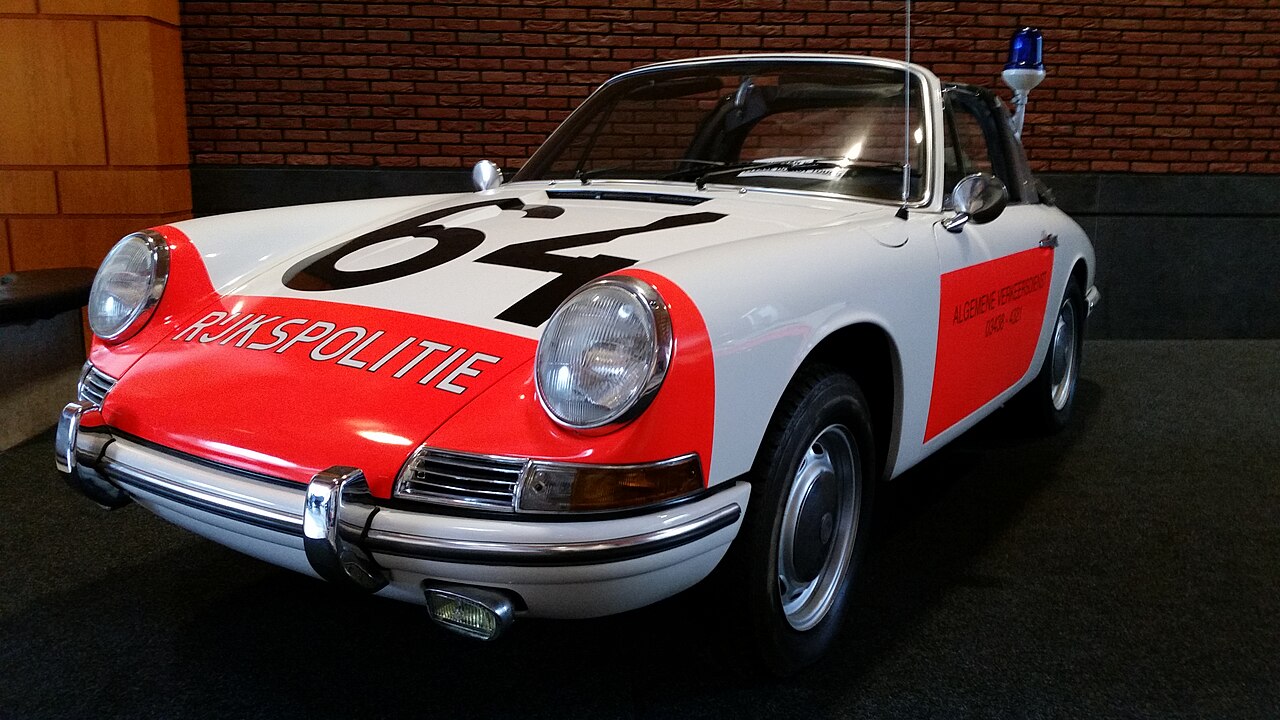
Photo: CC BY 2.0, via Wikimedia Commons
Introduced in 1967. The Soft-Window Targa (1967–1968) is considered the "Holy Grail" for collectors — the plastic rear window opens by zip, creating an almost fully open-air experience. Extremely rare and valuable. From 1968, a fixed glass rear window followed.
Porsche 912E
1976 · US Market Only · 2,099 Units
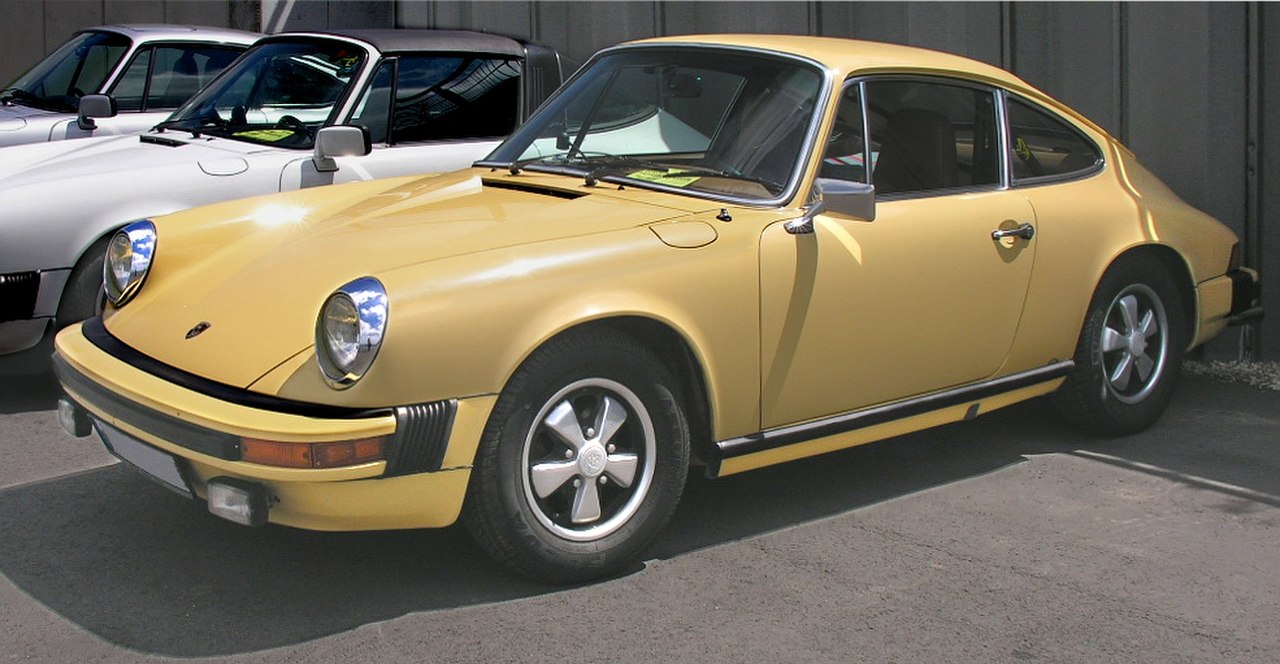
Photo: Wikimedia Commons
After the 914 was discontinued, Porsche needed an entry-level model for the US. The 912E uses the G-model bodyshell and the 2.0-liter VW fuel-injected engine (Type 4). Despite the "bread-and-butter" VW engine, with only 2,099 units built it is rarer than many 911s, extremely reliable, and the perfect introduction to the world of air-cooled Porsche G-models.
Year-by-Year History: The Fine Differences
The differences between model years are decisive for market value. Verify these details carefully at every viewing.
How many Porsche 912s were built?Production numbers by year, Coupé vs. Targa and 912E — with source notesView →SWB — The Beginning
Production started in April 1965. The earliest cars are particularly valuable to collectors, as many were still built at the Reutter coachworks before production moved entirely to Karmann. Characteristic is the flat dashboard with just three instruments and the upper surface finished in body colour.
SWB — First Refinements
The 912 established itself as a bestseller, outselling the 911 in registration numbers. The interior was standardised with five instruments to bring it visually closer to the 911. The 5-speed gearbox became a frequently chosen option over the standard 4-speed.
SWB — Freedom with the Targa
The year the Targa was introduced. To comply with US safety regulations, Porsche developed the distinctive stainless steel safety hoop. In this year the 912 Targa was available exclusively with the "Soft-Window" (fold-away plastic rear screen) — today one of the most sought-after variants of all.
SWB — Safety and Transition
This year is technically unique: it combines the short wheelbase (SWB) for the last time with new safety features such as padded dashboards and larger exterior mirrors. Door handles and window winders were also modified. Only 1968 cars received the distinctive side reflectors for the US market.
LWB — The Long Wheelbase
To settle the handling, the wheelbase was extended by 57 mm. Visually identifiable by the slightly flared rear wheel arches. This was the final year of classic 912 production, making these models particularly desirable due to their rarity and improved ride comfort.
G-Model — The Return as 912E
After a six-year hiatus, the 912 returned to the US for a single model year. It was based on the G-model body with the distinctive rubber-bumper overriders and powered by the 2.0-liter VW fuel injector (Type 4). Despite the utilitarian mechanicals, it is today a sought-after collectible due to its rarity (2,099 units).
Technical Specifications
| Specification | Porsche 912 (1965–69) | Porsche 912E (1976) |
|---|---|---|
| Engine | 1.6L Flat-4 (Type 616/36) | 2.0L Flat-4 (VW/914 engine) |
| Output | 90 hp (66 kW) | 86 hp (63 kW) |
| Displacement | 1,582 cc | 1,971 cc |
| Torque | 122 Nm at 3,500 rpm | approx. 152 Nm |
| Fuel system | 2× Solex 40 PII-4 carburetors | Bosch L-Jetronic fuel injection |
| Gearbox | 4- or 5-speed manual | 5-speed manual |
| 0–100 km/h | approx. 11.6 s | approx. 13.5 s |
| Top speed | approx. 185 km/h (115 mph) | approx. 175 km/h (109 mph) |
| Kerb weight | approx. 890 kg (1,962 lb) | approx. 1,020 kg (2,249 lb) |
| Wheelbase | SWB (to 1968) / LWB +57 mm (1969) | LWB |
| Total production | around 30,745 | 2,099 |
| Body styles | Coupé, Targa | Coupé |
Buying Guide: The Economic Reality
Important: Because the value of a 912 often (still) does not reach that of a 911 F-model, structural condition is everything. A full restoration costs as much on a 912 as on a 911, since the panels, chrome, and paint are identical. Buying a wreck without completeness rarely returns the investment. Prioritise Matching Numbers and original interior.
Body & Rust
These four areas are the classic problem zones — check them with a magnet for filler:
- →Sills & jack points (often filled)
- →Battery boxes in the front trunk (acid damage and spray water)
- →Headlamp buckets behind the lights
- →Floor pans: check under carpets for moisture and through-rust
- →Targa hoop (beneath the stainless overroll)
Engine & Gearbox
The Type 616/36 is robust, but not self-maintaining. Look for:
- →Carburetors: Solex 40 PII-4 are sensitive — rough idle indicates a rebuild is needed
- →Oil leaks: light misting is normal, drops at the case split = expensive seal job
- →Gearbox: synchromesh on 2nd and 3rd (grinding = costly warning sign)
- →Solex or Weber carburetors? (Solex = higher originality value)
- →Engine number on crankcase (right, below distributor)
Originality & Matching Numbers
In a market where a perfect 912 can cost over €100,000, originality is the greatest value driver. The engine number must match the Kardex document. Original dashboards without cracks and period seat covers (e.g. Pepita fabric) are hard to find and expensive to source.
History & Documentation
Complete documentation is money in the bank. Ideal is:
- →Kardex document from Porsche Classic
- →Porsche Certificate of Authenticity (COA)
- →Unbroken service history / stamp book
- →Original on-board documents (owner's manual, warranty booklet)
When checking matching numbers and the build year, the chassis number is your starting point. The Porsche 912 VIN decoder reads year, variant and body from any 912 chassis number — free, no signup.
Price Guide by Condition (as of 04/2026)
Flawless
Very good
Good
Worn
Project
| Variant | C1 | C2 | C3 | C4 | C5 |
|---|---|---|---|---|---|
| Coupe SWB (1965–1968) | €75,000 | €52,000 | €33,500 | €18,000 | €9,000 |
| Coupe LWB (1968–1969) | €72,500 | €50,000 | €32,500 | €17,500 | €8,500 |
| Targa Hard Window (1966–1969) | €78,000 | €55,000 | €36,000 | €19,500 | €9,500 |
| Targa Soft Window (1965–1969) | €84,000 | €58,000 | €38,000 | €21,000 | €10,500 |
| 912 E (1975–1976) | €54,000 | €37,500 | €26,000 | €14,500 | €7,000 |
Source: classic-analytics.de (04/2026) · Not suitable for insurance purposes · Unrestored patina cars may exceed C1
Current market prices in our live price tracker · Deeper analysis in the Porsche 912 Market Report H1 2026
Inspection Checklist
- Matching Numbers: Do the engine and gearbox numbers match the documents?
- Magnet test: Do magnets stick to the sills and wheel arches? (Check for filler)
- Electrics: Do all instruments work? (Early VDO gauges are costly to rebuild)
- Documentation: Is the full history (logbook, invoices, COA) traceable without gaps?
Custom Builds & Outlaws
The 912 is the perfect base for individualists. Without the pressure of absolute originality demanded of a million-euro 911 S, fascinating projects emerge — from stripped-back outlaw builds in the spirit of Magnus Walker to high-end performance conversions.
Kamm Manufaktur
This Hungarian workshop builds the 912 K4 — a carbon monster with over 170 hp. High-performance classics at the highest level.
Drew Hafner
His minimalist builds are masterworks of aesthetics: reduced, considered, and consistently beautiful.
Frequently Asked Questions
What is the difference between the Porsche 911 and the Porsche 912?▾
How many Porsche 912s were built?▾
What is a Porsche 912 worth today?▾
What is a Porsche 912E?▾
What does "Matching Numbers" mean for the Porsche 912?▾
What body variants were available for the Porsche 912?▾
Why is the Porsche 912 sometimes more expensive than a Porsche 911 SC?▾
Is the Porsche 912's four-cylinder underpowered?▾
Where do I find the engine number on a Porsche 912?▾
What is the difference between Solex and Weber carburetors on the 912?▾
How many Porsche 912s were built in total?▾
Conclusion
The Porsche 912 is the quintessence of the essential. It offers the design of an icon, the handling of a sports car, and the sensibility of robust engineering. Whether as an original car with a complete history or as the base for an individual outlaw build — the 912 captivates in its own unique way. Use our price tracker to compare the finest examples from around the world.
Market Categories
Search smarter, not harder — our live category pages automatically filter the worldwide market by the most important 912 sub-categories.
Porsche 912 SWB (1965–1968)
The purest form — short wheelbase, agile handling.
Porsche 912 LWB (1969)
The only long-wheelbase model year — built for 1969 alone.
Porsche 912 Targa
Open-top motoring with the iconic roll bar — including Soft Window.
Slate Grey / Schiefergrau
The most coveted colour among serious collectors — code 6404.
Project Cars & Barn Finds
Entry-level projects with genuine restoration potential.
European Specification
No import duty, no conversion — left-hand drive from Europe.