
Drive Patina AI Assessment
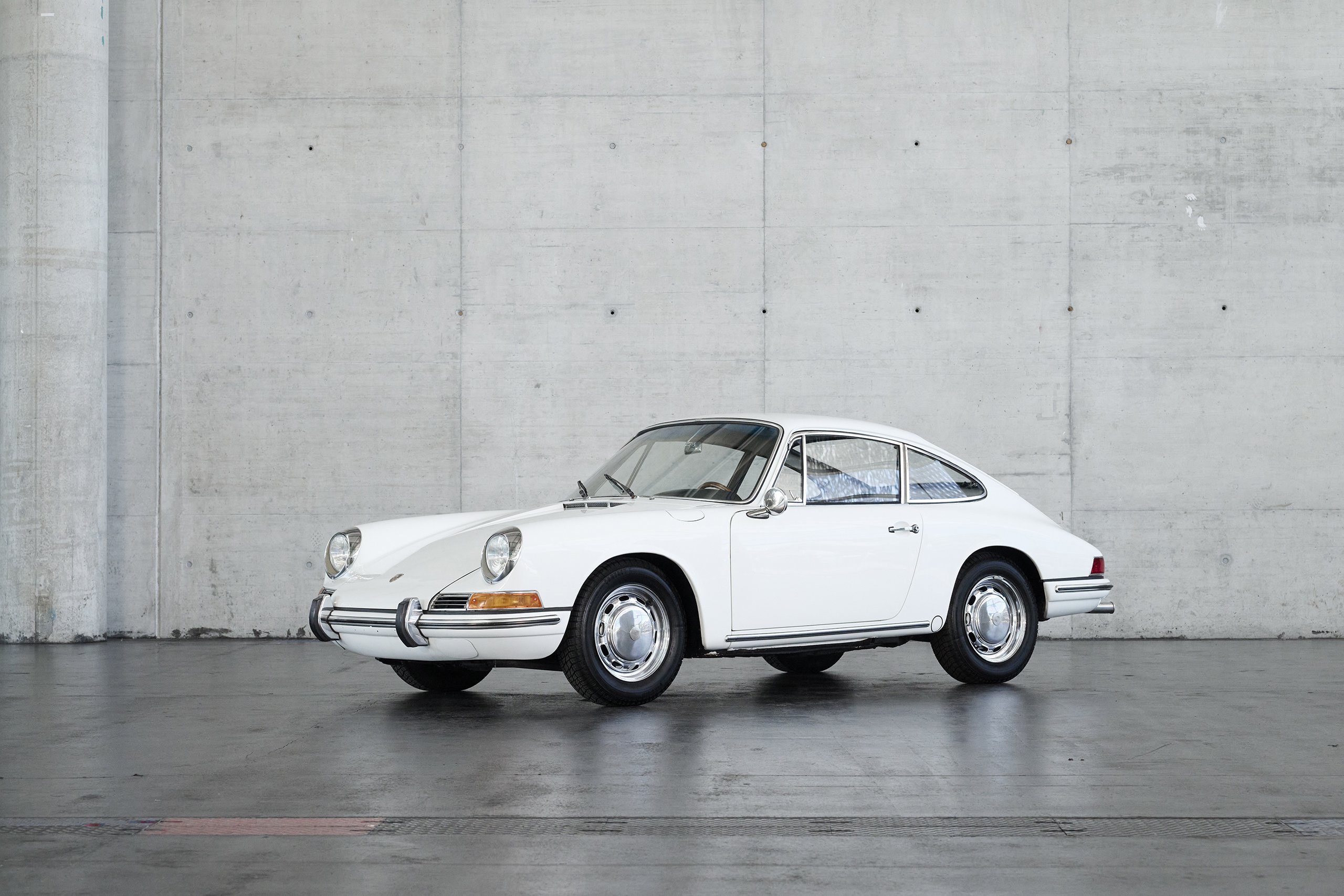
This early 912 with only three instruments represents a sought-after model year, though it appears to have been repainted (originally Enamel Blue, now white). The single photo shows a clean, well-kept car with correct period appearance, but there is no information on mileage, price, engine, or history. The ten-year German registration and regular use on classic rallies suggest active maintenance. Without a stated price, no comparison to the market median of €69,000 is possible, and the lack of additional and engine photos significantly increases buyer risk.
Drive Patina AI assessment based on listing data — not a professional appraisal.
Beschreibung
Early Porsche 912 with just three instruments Originally delivered in rare Enamel Blue Registered in Germany for the past ten years Regularly used on classic rallies since then When Porsche introduced the 911 as the successor to the 356 in 1964, the step forward was considerable – unfortunately, so was the price. Not every existing 356 customer could or wanted to stretch to the new six-cylinder model. The solution was already sitting on the shelf: combine the modern body of the 911 with the proven four-cylinder engine from the 356. Thus, in 1965, the 912 appeared. Its 1.6-litre boxer engine was essentially derived from that of the 356 SC and produced 90 hp. That was considerably less than the 130 hp of the early 911, but then the four-cylinder also had less weight to carry around. Most importantly, the extra kilos of the six-cylinder were missing from the very rear, giving the 912 balanced weight distribution and notably benign handling. Less, in this case, was not necessarily worse. The concept made sense financially too. The 912 cost considerably less than the 911 and allowed Porsche to make the transition from the 356 to its new model generation rather more gently. Visually, its owner had to make few concessions. Unless one happened to study badges or count cylinders, what one saw was simply a new Porsche. Like the 911, the 912 was continually developed. The Targa joined the range in 1967, while for the 1969 model year it too received the longer wheelbase. By then, however, the jointly developed Volkswagen-Porsche 914 was already approaching. After around 30,000 examples had been built, the 912’s first career therefore came to an end in 1969. Today, what once appeared to be its weakness is precisely its strength. The 912 is lighter, simpler and closer in character to the 356 than its six-cylinder brother. It was never the Porsche for boasting about at the pub. It may, however, have been the better one for a winding road. This Porsche 912 Coupé originally came from the USA and, according to the body plate on its A-pillar, was built in 1966 in rare Enamel Blue (6403). Years later, the 912 found its way back to Europe. The Porsche has been registered in Germany since 2016. Here, however, it did not become a mere collector’s piece. Its owner used the 912 regularly and very much in keeping with its character. Among other things, the Coupé took part in classic rallies, accumulating not merely event mileage but also demonstrating why the little four-cylinder continues to have such a loyal following among enthusiasts of early Porsches. With less weight at the rear and a manageable 90 hp, it has less need for long straights than for roads on which a nimble Porsche can make the most of its qualities. Accordingly, this early 912 presents today as a classic that has actually been driven rather than cosseted for decades as a display piece. Its American past is as much part of its story as its documented life in Germany since 2016 and its rally outings of recent years. Perhaps that suits the 912 particularly well. It was never the Porsche for big numbers or impressive power figures. Instead, it was light, uncomplicated and thoroughly engaging to drive. This example has actually been allowed to be exactly that: a Porsche for driving.
Porsche 912
1966 Porsche 912
This early 912 with only three instruments represents a sought-after model year, though it appears to have been repainted (originally Enamel Blue, now white)